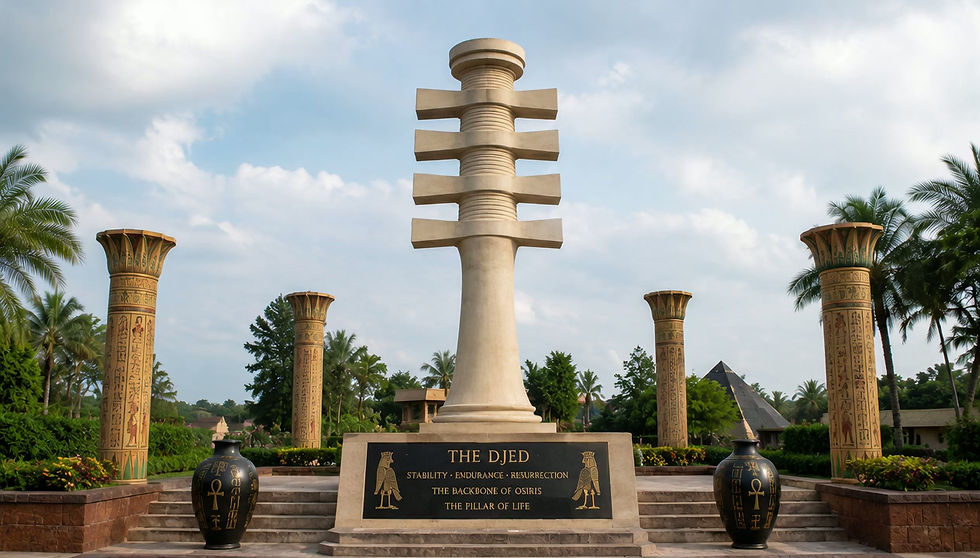
DJED FEST: A POWERFUL GATHERING AT TAMA-RE
The Nuwaubian New Year Celebration That Drew Thousands to “Little Egypt of the West”
PUTNAM COUNTY, GA — Each year on June 26, a unique and powerful cultural event once unfolded on 476 acres of land known as Tama-Re, often referred to as “Little Egypt of the West.” This annual celebration, called Djed Fest, marked the Nuwaubian New Year and brought together thousands from across the country and abroad for a full day of unity, learning, and cultural expression.
Set within the visually striking Crystal City “Wahanee,” attendees were immersed in an environment unlike anything else in the United States. Massive pyramid structures, obelisks, and Egyptian-inspired architecture served as the backdrop for a dynamic gathering that blended education, spirituality, and community engagement. From sunrise to evening, the grounds were alive with lectures, musical performances, youth activities, martial arts demonstrations, and vibrant cultural showcases.
At the heart of the celebration was the Djed, an ancient symbol representing stability, endurance, and elevation. Its meaning extended beyond symbolism—serving as a central theme for the event itself. Participants were encouraged to reflect, reset, and step into a new cycle with renewed purpose and clarity.
Djed Fest was not merely an event—it was an experience. Families, leaders, students, and seekers alike engaged in an atmosphere designed to inspire growth and awareness. The festival emphasized structure, discipline, and knowledge, while also celebrating creativity, culture, and collective identity.
Though the physical grounds of Tama-Re are no longer active, the legacy of Djed Fest continues to resonate. For many, it stands as a reminder of what is possible when vision, organization, and community align with purpose.
As interest grows around historical narratives and cultural movements, Djed Fest remains a significant point of reference—one that continues to spark curiosity, conversation, and deeper exploration.

The Djed: The Sacred Backbone of Kemet and the Meaning Behind Djed Festival
By HIP NEWS Editorial
To understand the significance of the Djed Festival at Tama-Re, one must first understand the ancient symbol from which it takes its name: the Djed.
The Djed is among the oldest and most revered symbols of Ancient Kemet (Egypt). For thousands of years, it represented stability, endurance, permanence, and resurrection. Ancient Egyptian priests associated the Djed with the backbone—or spine—of Osiris, symbolizing the restoration of divine order after chaos. In temple ceremonies, the ritual known as "Raising the Djed" celebrated renewal, resilience, and the triumph of life over disorder. During these ceremonies, the pillar was ceremonially erected as a declaration that stability had been restored to both the kingdom and the people.
For the ancient Kemetic mind, the backbone was far more than anatomy. It was the central pillar that held the entire body upright. Without a spine, the body cannot stand; without stability, a civilization cannot endure. The Djed therefore became the perfect emblem for spiritual strength, continuity, and the ability to remain firmly established despite adversity. The symbol also appears throughout funerary art, temple architecture, and protective amulets, where it represented resurrection, steadfastness, and eternal life.

From Ancient Kemet to Tama-Re
When thousands gathered at Tama-Re, "The Little Egypt of the West," each June for Djed Fest, they were participating in a celebration whose symbolism reached back thousands of years. The processions, ceremonial marches, white garments, sacred architecture, and movement toward the Great Pyramid reflected themes of discipline, unity, remembrance, and continuity inspired by ancient Egyptian traditions.
For many within the Nuwaubian community, Djed Fest was understood as more than a cultural gathering. It represented the strengthening of the community's spiritual "backbone"—a reaffirmation of knowledge, identity, and collective purpose. The march toward the Great Pyramid symbolized a journey toward higher understanding, while the ceremonial walk echoed the ancient concept of aligning oneself with stability rather than confusion.
Many former participants also remember the festival as an annual renewal of commitment to the teachings and the future of the community. While interpretations of specific prophetic meanings vary among attendees, the central symbolism remained remarkably consistent: to stand firm, remain upright, and continue forward despite opposition. That interpretation reflects community belief, while the broader symbolism of the Djed itself is well documented in ancient Egyptian history.
Published by HIP NEWS
Your source for insight, awareness, and the
pursuit of truth in the freedom of Dr. Malachi Z. York

Monks at the
Zjed Festival
Why did Monks attend the Zjed Festival?
Monks specifically Nuwaubian monks and initiates—attended the Sed festival (often spelled Zjed or Heb Sed in Nuwaubian literature) in 1996 to celebrate the continued divine rule, renewal, and spiritual authority of their leader, "Dr. Malachi Z. York." The event was a centerpiece of life at the Tama-Re compound. Understanding why they gathered involves looking closely at the festival's purpose and the group's structure.
Renewal of the Leader's Authority
Pharaonic Tradition: The Nuwaubians adapted the ancient Egyptian Heb Sed festival, which was traditionally held to rejuvenate an aging Pharaoh's physical and supernatural powers after 30 years of rule.
Affirmation of York: In the context of 1996, the festival was used by the group's "monks," "priests," and followers to ritualistically validate York as a living deity and modern-day Pharaoh.The Release of "The Holy Tablets"
New Doctrine: The 1996 festival coincided with a major turning point for the group: the publication of their core holy book, The Holy Tablets.
Spiritual Initiation: Monks and high-level initiates from various "Holy Tabernacle" sectors traveled to the compound to receive these new teachings directly and participate in massive communal rituals.Pilgrimage and Sovereignty
Sacred Ground: Tama-Re was treated as a "Sovereign Nation" and a holy pilgrimage site (referred to by members as the "Egypt of the West").
Ritual Devotion: Attending the festival was an obligatory act of devotion for monastic members, who wore specialized Egyptian-themed regalia, marched in processions, and participated in secretive lodge rituals designed to project spiritual unity and power.
What are the monks chanting?
"Hotep Asara Sa" is a combination of ancient Kemetic (Egyptian) concepts. Hotep (ḥtp) means "to be at peace" or "satisfied". Asar (Ausar) refers to the deity Osiris, the god of resurrection and the afterlife. Sa (or Sahu) relates to protection or to the divine soul.
This phrase translates to bringing peace and protection through the spirit of Asar.
#monks #tamare #zjedfestival #egyptofthewest #hipnews
The Living Symbol
Today, the Djed continues to stand as one of Kemet's most recognizable sacred emblems. Its message transcends time:
Stand firm.
Remain balanced.
Build a foundation that cannot easily be shaken.
Whether carved into temple walls over three thousand years ago or remembered through the ceremonies once held at Tama-Re, the Djed remains a timeless reminder that civilizations—and individuals—are sustained by the strength of their foundation. Just as the spine supports the body, principles, knowledge, and discipline support a people.
For many who attended Djed Fest, that enduring lesson remains one of the celebration's most meaningful legacies.